Showing posts with label Chuck Palahniuk. Show all posts

Wednesday, September 28, 2011

Author Brandon Tietz: On Writing Communities

I've always been of the strong opinion that a successful writer does not develop in a vacuum. From my experience, the best writers, those who experience the greatest amount of success, are quite active within some brand of writing community, whether it's local or online, MFA program or independent workshops developed by like-minded writers. Any opportunity a writer can take advantage of to connect with other writers, learn more about the craft and industry and get valuable feedback can be a very fruitful step toward success and a potentially worthwhile investment. 

Author Brandon Tietz is here to share his experience in such a writing community. While his experience is focused on what he learned through chuckpalahniuk.net, I encourage you to find a writing community that's right for you and your work. 


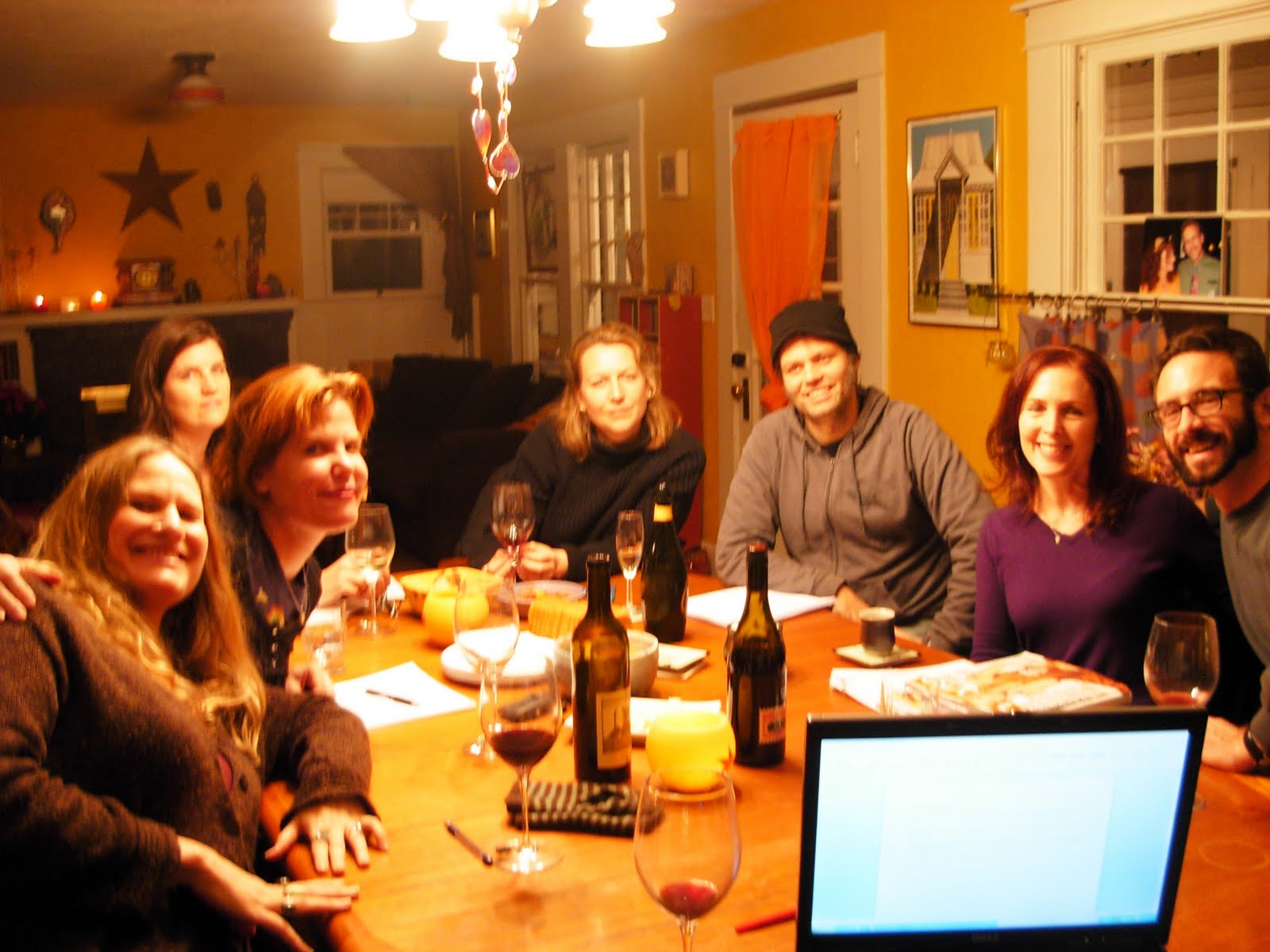
It was May 2009 when I came to The Cult—specifically, the Chuck Palahniuk Writers’ Workshop, in which I had hoped to get my work in front of the author, and perhaps earn myself a little credibility in the process by way of an anthology contest that was being run.  At that point, I had no published work other than a novel I took through a vanity press, which, if you’re familiar at all with the industry meant two things:


I had paid to see my work in print.

Because I had paid for my work to be printed, this was considered a huge faux pas.


It’s not that I wasn’t confident in my abilities as a writer, but when it came to the industry of publishing, I was lacking a lot of key information other than “you need to get an agent.”  As most aspiring authors know, querying an agent with no credentials is rather futile, and that was much the case with me.  I also had no MFA or formal declaration on paper saying that I could write.  Essentially, the will was there—had been there for some years, actually, but the method on how to get into print remained foggy.  The Cult changed all of that.

Not only was I able to correspond with other writers and authors, finding out the methods that worked regarding craft, marketing, and publishing, but I was also getting the critical eye that my work had long been missing.  My missteps were identified and amended.  The things I was doing right, I learned to do better.  It was an opportune time in which both my writing and publishing IQ skyrocketed just by taking advantage of the resources workshop and community offered me, and it wasn’t without positive residuals.

After getting back-to-back nominations for my June and July stories, my August submission about conflict diamonds was selected as a finalist to go in front of Chuck Palahniuk.  Two more would make finalist after that, and although I don’t know if any of these pieces will make the final cut for his anthology, it doesn’t seem to matter as much anymore.

My vanity press novel got a re-release through a traditional publisher.  I learned how to get my work in print, and have been doing so in the form of lit mags and anthologies.  And I got a literary agent who is currently pitching my next book to places like Viking, Random House, and Doubleday.  This all happened within the last couple of years, and even though I don’t I think I’ve technically “made it” just yet, I can’t deny that I’m on the right path to do it.  I’ve always had the ambition, but The Cult taught me how to capitalize on it. 

LitReactor will continue to do that with other writers, and I’m quite honored to be a part of what’s sure to be a staple in the literary community.

TLC: A word about self-publishing: a self-published book is not a turn-off for me in the slightest. In fact one of my favorite novels, Strip Cuts, is a self-published literary novel that received a very positive review from Publishers Weekly and was favorably compared to Sherwood Anderson's Winesburg, Ohio. If you decide to self-pub, you must approach it like a business and make sure every effort to print and promote your work is polished and professional. It's a great option for the right author. 

TLC

Monday, September 26, 2011

Introducing, LitReactor!

I don’t remember how I found Chuck Palahniuk’s website die-hard fans call The Cult or why, but I do remember when I discovered it, I was a hungry agent looking for fiction with a strong, beating heart and a voice to match. Chuck was already long spoken for, but his fans were writing. Not only that, they were organized about it. And serious. Real serious.They organized their efforts to develop their craft in the writing workshops supported by the site. I was further surprised to learn that Chuck oftentimes led some of these writers’ workshops, leaving behind him an impressive trail of craft essays and lessons showing writers how they could develop and strengthen their craft as he had.

A major, bestselling author supporting writers in this workshop format online was extraordinary back in 2005, when I was introduced to The Cult. In 2011, it’s still extraordinary. Sure, more major authors are blogging, tweeting and otherwise reaching out to their readers and readers who want to learn to write more than ever before, but throughout the past 6 years, few bestselling authors outside an established MFA program have rolled up their sleeves and gotten down in the trenches alongside aspiring writers.

The workshop proved successful; so successful, the creative team behind The Cult, Dennis Widmyer, Kirk Clawes and Mark Vanderpool made the decision to move the workshop from its original home to a new literary website, boasting a vibrant magazine with articles, book reviews, industry news, all around book geekery and more as well as the writers’ workshop with an impressive lineup of instructors ready to launch October 1st.

It’s called LitReactor.

Founding Partners Dennis Widmyer, Editor in Chief, and Kirk Clawes, Technical Lead, are here to shed some light on what LitReactor is, who it’s for and what this new, potentially revolutionary website aims to accomplish in the literary world. (Director of Education, Mark Vanderpool will be here Friday to share more about the workshops).

What Does LitReactor mean?

Dennis: At its fundamental meaning, the name conjures up a 'lit' reactor.  Something that is on. Breathing. Alive. Functioning. The dictionary defines a portion of the word as:

Any of several devices in which a chain reaction is initiated...

To us, this is how we see our Writers’ Workshop, which is one of the core features we offer on the site. It's a place to come and be motivated. To get results.  

The other side of this meaning reflects our Magazine. And here, the name could simply mean A reaction to literature.

All that aside, we just think it sounds cool.  


What's the philosophy behind the site?

Dennis: Writers tend to exist in a vacuum most of the time. They have no one to share their work with. Network among. And get real feedback from. And all of that leads to what we call the “stall” - pushing off your hopes and dreams because you feel like you're getting nowhere. We wanted to provide a home for these people to link up with like-minded people, workshop their material, and take ground-breaking classes on par (if not exceeding) the lessons you'd get in a 20K+ MFA program.

Kirk: We wanted to create a home for writers to hang out, meet each other, improve their skills and to geek out about the thing we hope they all love - BOOKS!


How does LitReactor fill a gap in the writer's market?

Dennis: At LitReactor, every name has a face and a personality. Our classes are developed and taught by actual published authors and established professionals in the literary industry.

Beyond that, we are aiming to build a solid community of people who share similar goals and in addition to wanting to grow as writers; they want to help others grow as well. We hope to do whatever is possible to help facilitate those relationships.

What breed of writer will be most drawn to LitReactor?

Kirk: Without a doubt writers who consider themselves to be: hip, edgy, loud, experimental, opinionated. I could toss a dozen or so buzz-words here but in the end you always end up sounding cheesy. You'll notice I only used 5 buzz-words, which has scientifically been proven to not sound cheesy (not intended to be taken as a factual statement). 

Dennis: We live in a generation right now where social networking has given people a platform to express themselves whether it’s in 140 characters or a three page blog.  What this has done is light a match under a lot of people's butts.  It's made them feel creative again. Hungry. Authors like Chuck Palahniuk, a writer who didn't pick up the craft until his mid-thirties (and learned through workshops!), seem accessible and give inspiration.  At the risk of sounding cheesy... writing the great American novel (if that's your poison) seems manageable suddenly.  And this is the frame of mind that makes LitReactor an unparalleled advantage for a writer looking to hone their voice.

When you began to create chuckpalahniuk.net, AKA The Cult, as a fan site, did you think such a serious, close knit writing community would be borne from a love of Palahniuk's work?

Kirk: I can't speak to this as well as Dennis as I haven't been around as long as he has - I began working with The Cult around 2002 in varying technical capacities. However, during my time I have seen some amazing things come out of the community. And though I started working with Dennis as a fan of Chuck's, what really kept me interested was the community of writers who were determined to see each other succeed.

Dennis: To be honest, I started the site really as just an archive, to collect every piece of media on Chuck Palahniuk I could find online. Then, when Chuck endorsed us and the publisher's started linking to us, we soon found that a ravenous community was forming, and that Chuck's love for mentoring, had a very key role to play. In 2005 the first incarnation of our Writers’ Workshop sprung up, through a joint idea between Chuck and I. It soon grew into our online classes which then soon grew to define a major arm of the site. By the time 2009 rolled around, we were already discussing plans to one day form a stand-alone site for this specific community of readers... readers who wanted to write.

What do you see happening in LitReactor's future?

Kirk: Primarily, I would like for us to be known as the place where interesting writers are developed. Kind of like what Second City in Chicago is to comedy. If all goes according to plan, we will continue offering top-notch classes and engaging content while growing a community of writers. I want it to be the place where when two writers meet they immediately exchange their LitReactor screen-names. There are also a lot of "big idea" things I would love to see happen, but those should probably stay under my hat for now. 

TLC: Writers, what I know is this: I’ve been working with the LitReactor team for months and I’ve never met a more professional, passionate, and supremely talented group of individuals ready to deliver such a feast to a portion of the literary world that have been malnourished for some time.

I’m stoked.

Join us for LitReactor’s launch on October 1st, won’t you? 

TLC


Wednesday, August 25, 2010

Clarity Through Workshopping: A Blogshop with Portland's Bestselling Writing Group

Welcome back to part two of Clarity Through Workshopping with New York Times bestselling authors Chelsea Cain and Chuck Palahniuk; award winning broadcast journalist and multi-media maven Diana Page Jordan and author Suzy Vitello Soule.

If you didn't read last week's blogshop about the distinction between MFA workshop programs and those outside the MFA structure, please do so for a quick refresher on the ground we covered as well as The Group's responses to my questions regarding the value of a good writer's workshop and their role within. Lots of great perspective.

This week, Suzy, Chelsea, Chuck and Diana share their perspectives on the benefits of a multi-genre workshop and the importance of balancing your passionate artistic side with your focused, disciplined and productive side - a challenge we all face because let's face it...it's a lot of fun letting our expressive side flow, but to be a productive writer, we need balance and we'll discuss that. As we experienced last week, everyone has a unique perspective.

I asked the group:

You all have such distinct and different literary voices. What are the benefits of working with a group with such broad range?

Suzy: When the core group of us began, we were more closely aligned in this regard. Over time, we’ve purposefully invited diverse voices to our table, broadening our range and inviting us to apply our, let’s call them preferences, in new and exciting ways. Employing some of the tenets of minimalism to the thriller, for instance, and exploring how they might be useful in bringing readers closer to the page, is only possible because we HAVE a thriller writer or two among us.

Chelsea: Huge. Everyone brings such a range of gifts to the table. Plot. Character. Voice. Objects. Senses. It’s like Super Friends, where all the heroes had powers that complimented one another. (Suzy, I’m pretty sure, has X-ray vision. Don’t tell her I know.) When you build a house the city doesn’t send just one inspector to look over things. They send an electrical guy, and a pipe guy, and a structural guy. They’ve got all sorts of guys. And all those guys have their little kingdoms of knowledge, and if any one of those segments doesn’t stand up to scrutiny, you’re going to have real problems with your house.


Diana: We are different spokes on one well-functioning wheel. Usually, opinions meld and build on each other. I can’t recall any dissension in Workshop. Even when writers disagree, new viewpoints, opinions, ideas spring from the differences. It’s actually very cool how it works. Maybe it’s because we all put the work above all else, including ego.

Chuck: A well rounded writing workshop ought to feel like karaoke night, singing in front of friends, but you've written your own song. It really does help train you to present your work publicly.

TLC: I like the picture Chelsea draws with a good workshop being like a thorough house inspection. A good writer knows the rules within their chosen genre. A well rounded writer knows good craftsmanship, appreciates language, knows good storytelling and effective information dissemination. Think of yourself as a Renaissance writer - multi-talented.

Meanwhile, Suzy can bring a taut writing style effective within the thriller genre to her own work, making her crafting and storytelling more effectively precise...and maybe a thriller writer can learn a few things from how writers like Suzy and Diana may linger over just the right string of words that will exquisitely capture a sentiment, feeling or thought.

Chuck hits on an interesting and important point...presenting your work to a multi-genre group of writers can do nothing but make you sharper and more confident as a writer who will one day be reading your work aloud to a group of strangers. You grow as a writer only when you step outside your comfort zone - in the context of this blogshop that means not only stepping outside your genre comfort zone but presenting your work to those outside that genre as well.

You don't have to like thrillers if they aren't for you; likewise with more literary prose - but it's important to appreciate their structure. Open your mind. The best writers spend their lives reading cross-genre.

TLC: Your passion for writing is evident in your storytelling. I coach my writers to use passion not only as a creative force but as a fuel that will propel them forward to take action in achieving the level of success they desire. This takes a good amount of artistic and personal clarity. What is your best tip for writers struggling to find a balance between their passionate, artistic self and the productive, disciplined, professional writer?

Suzy: Interestingly enough Monica Drake and I used to co-teach a workshop called Fueled by Distraction where we explored this very thing. The danger, I suppose, is when a creative person begins to feel dead, or gets overwhelmed by the demands of the normative life we all need in order to be productive human beings who engage in a range of things from feeding children to keeping up with the bills to helping loved ones cope with illness, etc… Being aware of the mind-body connection is essential. Understanding that various emotions pass, that being human is a dynamic process, these realizations are paramount in the self-definition of the functional artist. Taking some time to develop a formula that works for you is my advice here. A long walk in the woods helps me. Always. Here’s a little verse that imposed itself on me today during my traipse through Forest Park:

Sleep more, drink less. Say no three times more than you say yes.


TLC: I agree and I love the mantra. Creative types tend toward the more emotional end of the "feeling" spectrum, be it passionate love, bold confidence, red hot anger, gut wrenching self-loathing and everything in-between. The best writers are able to process those feelings, harness that power as fuel and put that drama on the page in a way that is relevent to their characters and the story or for nonfiction writers, your message.

Chelsea: You can’t make a living as a writer until you learn to write when you don’t want to. And you can’t be a good writer, until you learn how to edit.

TLC: Well said, Chelsea. When you routinely schedule time in your day to either write, research or connect, then you know you're on a new level creatively and professionally. You're moving forward one way or another.
Diana: Listen. Listen carefully to others’ opinions. Ask questions. Allow the information to swim inside, until intuitively, your work finds its own balance. One big idea I’ve picked up, is to honor your work by giving it a top priority on the calendar and the clock.

TLC: That's a great way of looking at it, Diana. It's pro-you time, which is what Suzy meant with her mantra. Writers, well not just writers, a lot of people, tell me about their "crazy" day or their "insane" morning. It's only crazy or insane if you choose it to be so. How you react to daily events is up to you. A great way to start being pro-you is to value your time. Don't let others jeopardize your time and clarity of mind by imposing their "craziness" into your life.

Chuck: Not to sound coarse, but... screw the "productive, disciplined, professional writer." As a weak person with poor impulse control I know that I'll do the activity which brings me the greatest pleasure. If I can continually find ways to make writing fun, then I'll write. And workshop functions as a weekly party where members can test their work to see if it elicits laughter or sympathy or moans; there's no more honest feedback than those spontaneous exclamations from others. We all want to attend more parties, and the ticket for entry is written work. Preferably, double-spaced and stapled.

TLC: Ahh, but Chuck, you've written several New York Times bestsellers, a few which have been made into successful movies and more that are in production. You've written 13 books in 14 years and countless articles for myriad publications. If that's not a product of a discipline or productivity, I don't know what else to call it...addiction to a successful writing career? At least it's a good one!

So, what else do we need to keep in mind when it comes to your workshop/party/karaoke night, Chuck?

Chuck: We seem to have an unspoken rule to never comment on the content of a story or scene; instead, we always brainstorm about the successful execution of that content. This seems crucial to not alienating eachother. For example, if a writer wants to depict a chainsaw murder no one will question the value of that subject, but we will debate how to depict it effectively. Group members are encouraged to write about anything -- but to do so with skill and craft.

TLC: Respecting the craft, skill and the artist - a great foundation for a successful workshop.

Many thanks to this wonderfully talented and diverse group of writers who took time to share their perspective and good advice with us!

Your exercise this week, writers: Like I said, the best writers read EVERYTHING. Take a fieldtrip to your book store, library or e-reader of choice and buy/download something you wouldn't ordinarily read but would be open to. Leave your book snobbery at the door and explore the sci-fi aisle, maybe romance or take a look at something in spirituality or travel.

Also, continue to explore joining a writing workshop or start your own! I want to hear how it goes, so share your news!

Have a fruitful week, writers!

Have any workshopping tips to share? Tell us all about it. Post your comments below.

About the Contributors:

Suzy Vitello Soule writes for a living. Her work has been published in various journals, including Mississippi Review, Better Homes & Gardens and Willamette Week. Her personal essay, "Dancing With the Paper Rose", was included in the anthology The Spirit of Pregnancy, by NTC Press. Suzy has won several awards for fiction and poetry, including The Atlantic Monthly’s Student Writing Award, STORY Magazine’s Famous Fiction Competition, and Willamette Week’s Short Fiction Award.

Chelsea Cain is the author of The New York Times Bestselling thrillers EVIL AT HEART, SWEETHEART and HEARTSICK. Her next book THE NIGHT SEASON will be out in March 2011. All take place in Portland, Oregon, and focus on Det. Archie Sheridan, rainbow-haired journalist Susan Ward, and Sheridan’s lovely nemesis, the serial killer Gretchen Lowell.Chelsea’s books have been published in over 20 languages, recommended on “The Today Show,” appeared in episodes of HBO’s “True Blood” and ABC’s “Castle,” and named among Stephen King’s top ten favorite books of the year. NPR included her book HEARTSICK in their list of the top 100 thrillers ever written. According to Booklist, “Popular entertainment just doesn’t get much better than this.” Entertainment Weekly adds, “In addition to spiky characters, Cain has a crisp voice, a wicked sense of humor, and an imagination for all the horrors that can unfold in a locked basement.” Chelsea lives in Portland with her husband and remarkably well-adjusted five-year-old daughter.

Diana Page Jordan is an award winning broadcast journalist, initially drawn to that industry as she wanted to be as close to the truth as possible. Her mission is to inspire, entertain, educate and enlighten.She is a news anchor, reporter and talk show host, based in Portland, Oregon, originally from New York City. Diana has interviewed hundreds of best-selling authors of all genre for her own show on AP Radio, for an audio segment of her creation on Barnes and Noble dot com for XM Satellite, Westwood One TV and radio in Portland. She has also reviewed books on Martha Stewart Living and Sirius and the local ABC-TV affiliate. Diana has written about authors for The Costco Connection and had three cover stories in the 2009/10 for The Writer's Digest. Her nonfiction is published in four anthologies. She's also written a memoir, screenplay and novel.Diana writes BookBlog and hosts a weekly show, Open Book with Diana Page Jordan at PDX.FM.

Chuck Palahniuk is the author of several New York Times bestselling books including CHOKE, DIARY, FIGHT CLUB as well as a contributor to myriad publications. Often shocking, sometimes controversial but always unique, Palahniuk's body of work has earned a world-wide devout following and a solid place in American fiction.




Monday, August 23, 2010

Killer Boots: Getting Clear about Workshopping with Suzy, Chelsea, Diana and Chuck

There are two kinds of writer’s workshops – those within the confines of an MFA program and those outside.

An MFA program will teach you the art of writing – the process of outlining, drafting and crafting with a fierce passion. Along the way, you’ll learn all kinds of technical jargon about plot structure and character development and so on. You’ll learn how to give and receive feedback constructively, (ahem, well, maybe). You’ll most likely learn a thing or two about publishing in literary journals, chapbooks, and other literary type magazines, but rarely will you hear much talk of mainstream publishing….anything outside the university or academic press system.

Then there are the writer’s workshops outside the MFA club. These range from a few like-minded friends getting together once a month to read and respond to each-other’s work to a group of well seasoned, published writers getting together weekly to read, critique and discuss their work in progress…with firm deadlines to meet from their editors.

Many writers come to me with questions about workshops from how to start one to what level of writer should be included to frequency of meeting, etc. To answer the first question, “How to start a workshop,” do your research. Start with the universities…I’m sure there’s a creative writing or English comp professor out there who’s in a writer’s workshop outside university walls. Ask your local indie bookseller, who typically knows the who’s who of your local literary scene, if they know of any workshops open to new writers. Ask your local librarian who might know of some workshops…they may be meeting there, you never know. The point is, get out of the house and ask! If you come up dry despite your best efforts, take the initiative to start your own. Ask writers you feel would contribute a certain educated voice to your group no matter their professional background…and don’t feel you need to only invite genre specific writers. Learn and explore outside your artistic comfort zone.

We’re kicking off a two week blogshop featuring members from one of the most dedicated, successful workshops in the country. You won’t find these folks in Iowa City or Irvine. And if you’re invited to join, you’d better come prepared and get over the fact you’re sharing your work with several of Portland’s bestselling authors and an award-winning journalist. They’ll come to the group with pages in hand, ready to talk shop – and so had you. Check your starry eyes at the door.

With us is New York Times bestselling thriller author Chelsea Cain (Heartsick; Sweetheart and more); freelance author Suzy Vitello Soule (a veteran of the group who’s working on a major book series right now that I can’t wait to read!); New York Times bestselling author Chuck Palahniuk (another veteran of the group and author of Fight Club; Invisible Monsters; Choke and more); and award-winning journalist, radio host and all around multi-media maven, Diana Page Jordan. For more background info, read this great article by Jeff Baker in
The Oregonian.

This is going to be a longer post than usual, so get cozy.

I asked the group:

How has workshopping your material helped you grow as a writer?

Suzy: Often, a writer has a hard time separating the story in her head from the story on the page. A good workshop points out the difference.

Chelsea: I really owe every bit of my success as a thriller writer to my writing workshop. I came to workshop four or five years ago with a whole lot of training in non-fiction writing and no clue how to write fiction. I mean, no clue. I had never taken a fiction writing class. I had a draft of my first thriller HEARTSICK, and we went through the thing chunk-by-chunk week after week. Along the way, I got a master class in fiction from some of the finest writers out there. Writers with MFAs. Who know stuff. I use those lessons every single time I sit down to write.

Diana: Absolutely, totally, without a doubt, it has. Having “grown up” in radio
– where I would go to a site, interview several people, break down the audio, write the script, four scripts usually, and then deliver the story on the air within an hour – I had no clue what second drafts were all about. I also learned the concept of unpacking – which, when I joined Workshop – seemed to be the favored comment from Chuck, Chelsea, and Suzy for my writing. Our group was that small when I joined, which helped, too, in the midwifing of a traumatic memoir. I didn’t even know what a workshop was until Chuck serendipitously invited me into Workshop. That invitation is a magical story, which made it into my memoir.

Chuck: Being among talented, dedicated writers, people who value the same artistic passions I value and have been trained by a wide assortment of brilliant past teachers, this gives me continued access to a far greater variety of recreational drugs.

TLC: Very funny, Chuck. Suzy touches on a good point – a good workshop is not only about art appreciation and being passionate about your story but translating that story that’s been mulling around upstairs, the one that’s been keeping you up at night, to the page through careful crafting. Good writing is equal parts craft and art.

How has it helped you gain clarity about where your story is going and who your characters are?

Suzy: Again, the creative process can give a writer a false sense of what has been conveyed—how strongly a character has been drawn, or how well the writing handles transitions. Objective, intelligent feedback is like having a second, more removed brain. It’s a great starting point for revision.

Chelsea: That’s not really the job of the workshop. That’s the writer’s job. If you don’t know where your story is going and who your characters are, all the writing workshops in the world can’t help you. This is one of the other things that the writing group has taught me – if you, as the writer, don’t do the work before you bring the piece in to workshop, it just wastes everyone’s time. Ideally, to get the full benefit of feedback, any work you bring in should be as good as you can possibly make it.

Diana: My BS in Journalism and Communications (University of Florida) can get me only so far. Being in Workshop is like borrowing an honorary MFA – these writers are brilliant people. Among other things, I gained clarity about POV, arc, and other key concepts. In most cases, I didn’t even know these things had names until I stumbled over them, and the writers pointed them out.

Chuck: Not so much. Workshop serves me better by reminding me where my characters have been: other writers will recall plot points or themes I've forgotten and allow me to bring them to the fore. "Bring them to the fore" that's some fancy talk'n. If other people can see where the story is going -- I'm not doing my job well.

TLC: So, clearly this process means something different to all of you. While I totally agree with Chelsea (because I don’t wanna see your work until it’s darn near perfect), Suzy and Chuck have great points, too. Sometimes you need that reaction…that feedback to see if you’re headed in the right direction creatively and adjust if you’re not. But it all boils down to you being in control of your work and your characters.

Do you ask each other for specific feedback about what is or isn't working or are you more laid back about how the feedback comes to you?

Suzy: Completely depends on what stage the draft is at when being critiqued. With early drafts, one often wants a general, overall reaction. Once an agent or editor has asked for specific changes, our members are not shy about being very detailed regarding the feedback they’re looking for.

Chelsea: It depends on the piece. Again, in a perfect world, we only bring in pieces that we’ve done all the work on that we can – pieces that are, in our mind, finished first drafts that are in our minds, doing what they’re supposed to do. Because if we bring in stuff that isn’t “finished”
and give feedback that we could have given ourselves, then what’s the point of that? But it’s not a perfect world, and sometimes we bring in stuff before it’s cooked. And sometimes we get stuck and just need help to free the ship from the iceberg. So occasionally someone will preface workshop with a particular concern, so the group can focus on that. “I don’t think the end is working here,” or “I’m looking for more ways to show who this character is.” I try not to do that because I’d rather see if any of this stuff shows up organically in conversation afterward. Maybe the end is working better than I thought, but if I plant the idea that it isn’t working then we spend the next forty-five minutes talking about it. If the trouble area doesn’t come up during conversation, then I’ll toss it around at the end of comments. “Did anyone else think the end sucked?” And I’ll see what people said then. But honestly, the group is so sharp, that if they don’t smell something foul then there’s probably not a dead body under the floorboards.

Diana: Yes, we ask each other for specific feedback, and this is true, of us all, to an individual. We each seem to feel free to follow up until we are content that we’ve “got it.”

Chuck: First, everyone in the group tells Chelsea how fabulous her boots look -- pinkie-swear, Chelsea wears a different pair to workshop every week. Second, before reading our work each of us might give a vague, technical description along the lines of, "This scene comes as the First Act Climax, but it Sets Up some big events in the Second Act and Buries A Gun I'll need for the Reveal in the Third Act." We adore Writer Plotting Jargon because it makes us feel less like writing nerds and more like International Spies.

TLC: So, like Suzy said, if you’ve got something specific you need feedback on due to an agent or editor’s comments, bring it up. While it’s important to be mindful of the feedback you’re given from your agent or editor, there will be times when the feedback you’re given from your workshop group differs...and you may see eye to eye with your group rather than your agent/editor. If this is the case, discuss it with your agent and/or editor.

And like Chelsea said, sometimes it’s not worth it to shine a spotlight on something you’re feeling insecure about when it’s a non-issue. Sometimes it’s best to not say anything at all, unless you’re really stuck, and see if your group spots it. If you’re really stuck, speak up.

Diana points to the backbone of what a workshop is all about – support and growth. To get good feedback, you’ve got to be willing to give it. A good workshop will be an almost harmonic balance of give and take between its authors.

It might not hurt to brush up on the writing jargon Chuck talks about if you, like Chelsea and Diana, haven’t had much experience with this language. And invest in some killer boots. Every international spy needs a pair.

Ok, my dears, that’s all for this week. Part two of this blogshop with The Portland Group, as I’m calling them, will return next Monday.

Your exercise this week:

If you’re already in a workshop, think of how it’s working for you and in what ways it could improve…don’t forget to examine your role in workshop. If you find there are areas that could be better…like everyone being totally prepared, address it diplomatically with the group…or the leader, if you have one. Maybe it’s an issue of feedback…are you learning from the kind of feedback you’re getting? If not, be more specific about the kind of feedback you need to get you on the right track.

For those of you NOT in a workshop, please consider joining or starting one! Try to join one that is not only focused on the art and craft of storytelling but on HOW to bring your work to an audience, if that’s your goal.

Thanks for joining us.

Have a fruitful week, writers!
Have any good workshopping tips to share? Do tell!


About the Contributors:


Suzy Vitello Soule writes for a living. Her work has been published in various journals, including Mississippi Review, Better Homes & Gardens and Willamette Week. Her personal essay, "Dancing With the Paper Rose", was included in the anthology The Spirit of Pregnancy, by NTC Press. Suzy has won several awards for fiction and poetry, including The Atlantic Monthly’s Student Writing Award, STORY Magazine’s Famous Fiction Competition, and Willamette Week’s Short Fiction Award.


Chelsea Cain is the author of The New York Times Bestselling thrillers EVIL AT HEART, SWEETHEART and HEARTSICK. Her next book THE NIGHT SEASON will be out in March 2011. All take place in Portland, Oregon, and focus on Det. Archie Sheridan, rainbow-haired journalist Susan Ward, and Sheridan’s lovely nemesis, the serial killer Gretchen Lowell.

Chelsea’s books have been published in over 20 languages, recommended on “The Today Show,” appeared in episodes of HBO’s “True Blood” and ABC’s “Castle,” and named among Stephen King’s top ten favorite books of the year. NPR included her book HEARTSICK in their list of the top 100 thrillers ever written. According to Booklist, “Popular entertainment just doesn’t get much better than this.” Entertainment Weekly adds, “In addition to spiky characters, Cain has a crisp voice, a wicked sense of humor, and an imagination for all the horrors that can unfold in a locked basement.” Chelsea lives in Portland with her husband and remarkably well-adjusted five-year-old daughter.


Diana Page Jordan is an award winning broadcast journalist, initially drawn to that industry as she wanted to be as close to the truth as possible. Her mission is to inspire, entertain, educate and enlighten.

She is a news anchor, reporter and talk show host, based in Portland, Oregon, originally from New York City. Diana has interviewed hundreds of best-selling authors of all genre for her own show on AP Radio, for an audio segment of her creation on Barnes and Noble dot com for XM Satellite, Westwood One TV and radio in Portland. She has also reviewed books on Martha Stewart Living and Sirius and the local ABC-TV affiliate. Diana has written about authors for The Costco Connection and had three cover stories in the 2009/10 for The Writer's Digest. Her nonfiction is published in four anthologies. She's also written a memoir, screenplay and novel.

Diana writes BookBlog and hosts a weekly show, Open Book with Diana Page Jordan at PDX.FM.


Chuck Palahniuk is the author of several New York Times bestselling books including CHOKE, DIARY, FIGHT CLUB. Often shocking, sometimes controversial but always unique, Palahniuk's body of work has earned a world-wide devout following and a solid place in American fiction.

Friday, August 20, 2010

...and then there were four!

Ok, now it's official! Monday kicks off a two part (at least) blogshop featuring award winning journalist, radio host, and all around multi-media maven, Diana Page Jordan; New York Times bestselling shock author, Chuck Palahniuk; Portland's best kept secret, Suzy Vitello Soule and NYT bestselling thriller author, Chelsea Cain.

In their own distinct voices, they'll be sharing their thoughts (rather) freely on the power of their unique Portland based workshop group, what to do with feedback and how to get it and how they balance their passionate, creative self with the disciplined, professional self...or not (but I don't buy that). You won't want to miss it! Grab a friend and join us Monday!

Have a great weekend, all!

TLC